 Shopping Cart (



The LED deck rail lighting is not just an aesthetic touch that brings that warmth during the dark hours, but also improves visibility and adds safety. This type of deck lighting brings comfort and security, making your railing look sharp and modern.
When it comes to LED deck railing, you have many options, ranging from glass railing with LED lights to under-railing LED lighting. However, the right approach really depends on your specific deck, environment, and setup, so that it can feel right.
Don’t worry, as this quick guide will walk you through everything you need to know about LED deck rail lighting and cover essentials such as the best setup approach, types, and pros/cons.
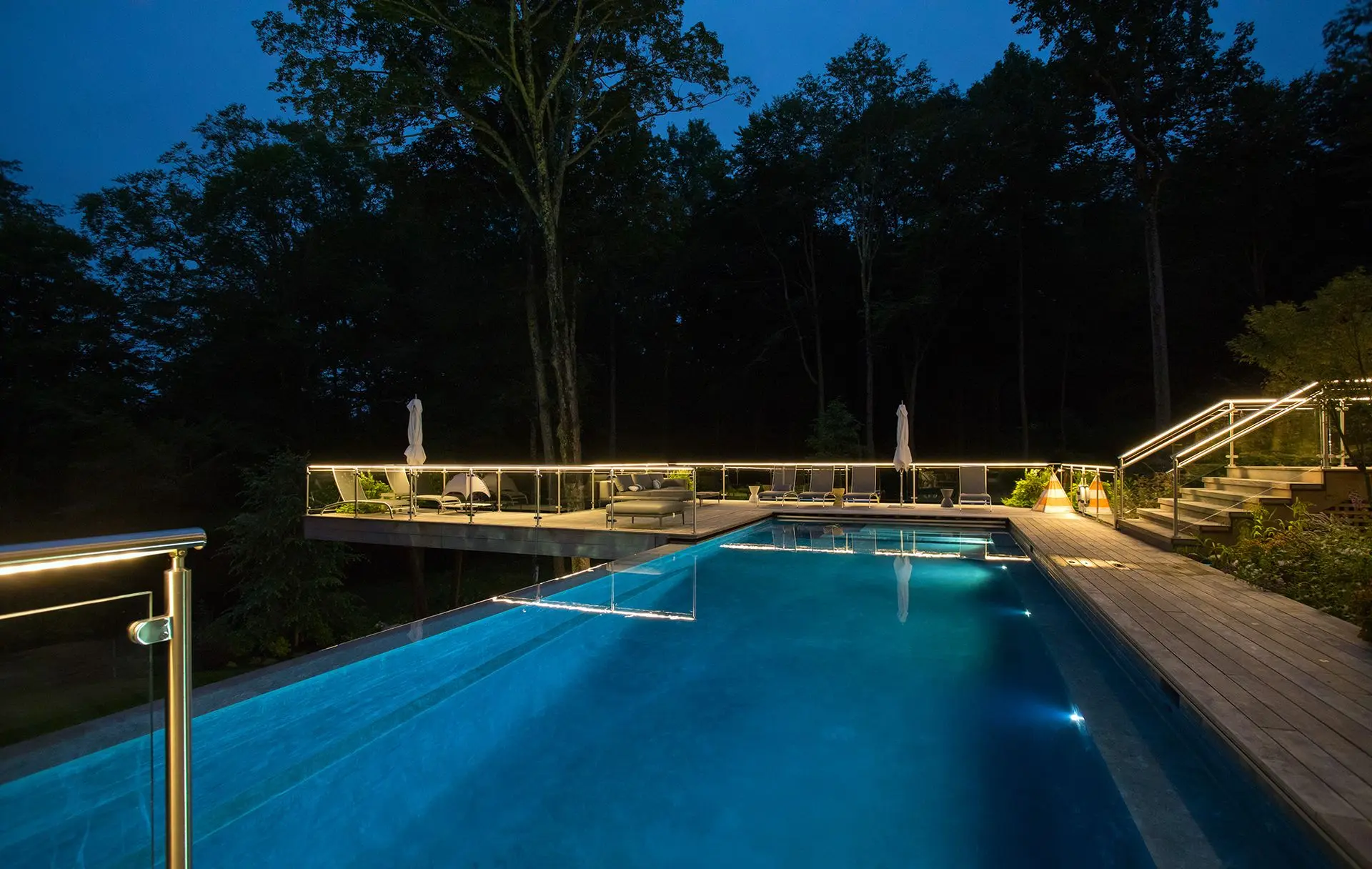
What Is the Best Way to Light Deck Stairs
Lighting your deck stairs reduces tripping risks and helps the design stand out at night. The main goal here is to guide the movement while keeping the look consistent with the rest of the deck. Most homeowners go with a setup that spreads light across each step without a glare.
The LED deck lights or LED strip lights for deck railing are the most reliable solutions. You can mount them under stair lips, inside LED handrails, or along posts with under-rail LED lighting. Use post cap fixtures for entry points and linear lighting for a clean, uniform path. Combining these options gives your stairs a professional finish that lasts.
What Is an LED Rail Lighting
LED rail lighting is an interesting technology that spreads a light fixture along the railing of your deck, stairwell, or any other railing. The main purpose of rail lighting is to underline the edges of the stair railing so they can be clearly visible during the dark hours.
The traditional setup involves LED railing lights that can fit well with stainless steel railing, glass panels, and even with frameless glass railing.
Note: With a bit of creativity, you can add LED lighting to absolutely any railing setup, especially if you’re going with a bare LED strip.
What Are the Three Types of LED Lights
There are three main types of LED lights, and each of them comes with a distinct purpose that matches different railings, occasions, and environments. The three primary options you’ve got are strips, bars, and track systems, so let’s take an in-depth look.
LED Strips
LED strips are perhaps the most popular option, since they are extremely easy to install on any deck railing, no matter the design, architecture, or setup. They are perfect for under-railing LED lighting, but can be installed pretty much anywhere.
LED Light Bars
The light bars, like the Micro Star LED light bar, are designed to produce very strong illumination for long and continuous sections of your railing. They will be great for an LED handrail system, where you need to define the path and outline edges.
LED Track Lighting
The LED track lighting utilizes small fixtures that can be adjusted on a single rail system. They are primarily used for indoor LED deck rail lighting, offering much more control over the direction that is being illuminated by the light beam.
These are a bit more expensive, though!
Is LED Lighting a Good Choice for Your Deck Railing?
The short answer is yes, LED lighting is a good choice for almost any outdoor railing system. The lighting is energy efficient, low-maintenance, and resistant even to harsh weather, making it ideal for pretty much any situation and environment.,
Tip: You can match your design with LED glass railing, LED banister rail, or LED handrails that keep the deck safe and visible without high power use.
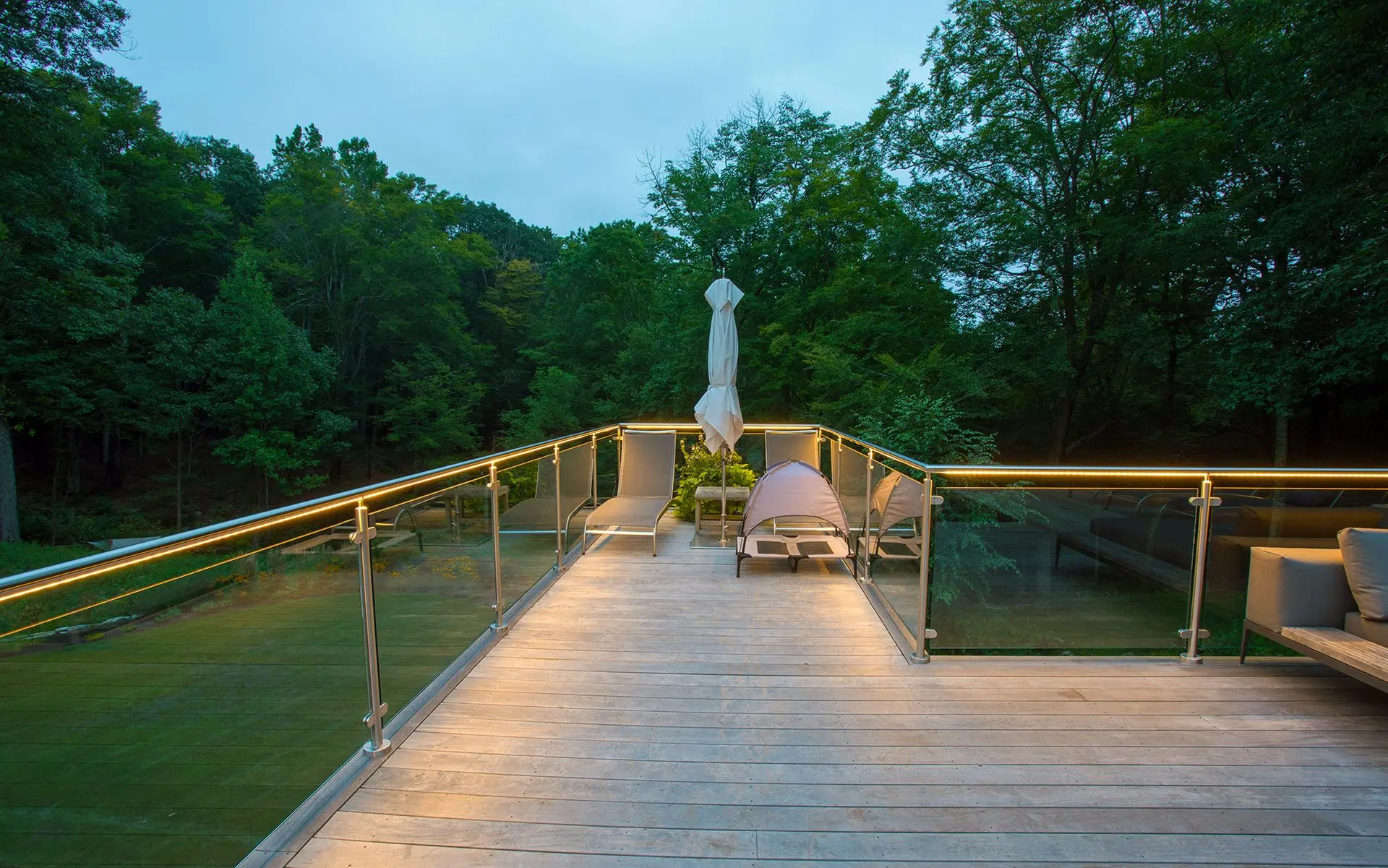
What Are the Disadvantages of LED Banister Railings
LED banister rail systems give decks a sharp, modern look while improving safety. Still, they’re not ideal for every setup. The cost, wiring, and maintenance level depend on how your rail system is built and the materials you choose.
| Advantages: | Disadvantages: |
| The biggest advantage is the longevity and performance in the long term. | Unfortunately, the upfront cost is higher because of the waterproof materials. |
| They improve safety by keeping stairs and walkways clearly visible after dark. | Installing them takes precision to keep moisture out and prevent short circuits. |
| They fit with stainless steel, glass railing, and frameless glass railing systems. | Repairs are tricky since most parts sit inside sealed rails or hidden joints. |
| They work well with LED strips, LED railing lights, and LED deck lights. | Cheap LEDs lose brightness fast and ruin the overall look of your deck. |
| They support modern rail lighting layouts with dimmable settings and smart controls. | They don’t perform well in areas with high humidity or extreme cold. |
When Should You Not Use LED Lights for Your Railings
The LED systems practically fit most decks, but there are some specific locations and scenarios when LED lighting may not be the perfect choice. Sometimes, the incorrect placement or the wrong materials can lead to a short lifespan.
- Excessive Sun Exposure: The biggest problem for LED strips is the long exposure to sunlight, which can be lethal to a strip after a few years.
- Unsealed Rail Systems: In many cases, any open gaps that allow water to enter can ruin your LED lighting, no matter whether it’s a strip, beam, or bar.
- Old Deck Structures: In a lot of cases, when the framing is not strong enough, the railing with LED lights can lead to safety hazards.
Note: Always check your rail system and power setup before installing under-rail LED lighting!
Can Decking Lights Be Left on All Night?
You can absolutely leave your LED lights for the deck railing working overnight, but only when you are confident that they are installed correctly.
The LED lights use too little power to emit enough heat for anything to happen, but when not set up correctly, they may not stay as cool as they are designed to. We recommend choosing white LED lights and a sensor or smart plug to turn them off automatically when they are not needed.
What Are the Chances of LED Lights Catching Fire?
The risk of fire with LED light rail systems is minimal. LEDs generate less heat than traditional bulbs and are built with non-flammable parts. Most issues happen from poor wiring or water exposure, not the light itself.