 Shopping Cart (



Many outdoor stairs often introduce risks, whether it’s during repairs and remodels, so anything from open edges and uneven steps could represent a safety hazard. This is where a temporary stair railing and portable handrails for stairs are needed, adding structure to support movement.
Many teams and homeowners sometimes rely solely on portable handrails to establish reliable fall protection, especially when working at heights. When combined with a portable stair rail, the structure meets basic safety standards and greatly improves grip, stability, and safety.
To better understand how portable stair rails and temporary handrails for stairs work, and why your team might need them, we will go over everything you need to know in this quick guide.
Starting with the most important…
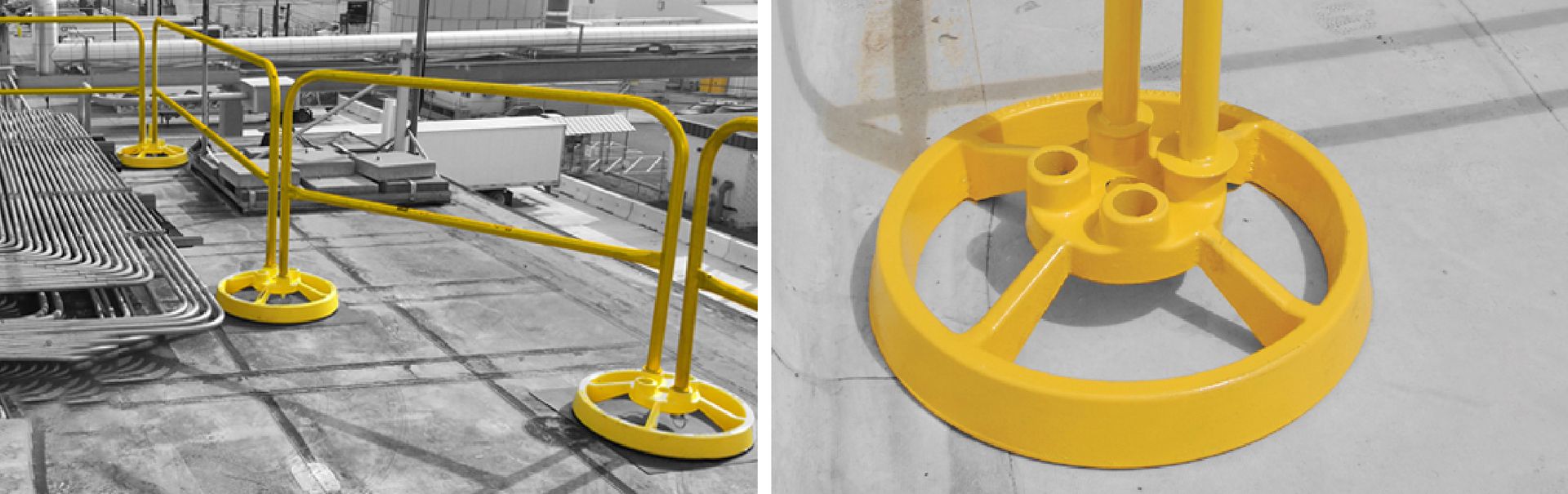
When and Why Are Temporary Stair Railings Needed
Temporary protection, whether it’s for stairs, ramps, or elevated surfaces, becomes absolutely necessary when normal access is not apparent.
Let’s narrow down some occasions that require temporary stair railings:
- Active Construction or Renovation: A temporary stair railing is necessary as a fall protection system for unfinished steps, removed protection, or an altered structure.
- Exterior Repairs and Landscaping: In case of uneven outdoor steps or access change, whether due to dust or mud, a temporary railing for stairs is critical to protect workers.
- Short-Term Access Alternations: A temporary handrail is ideal for areas with a temporary change in access, reinforcing the facility's safety without a permanent railing system.
Note: Sometimes, a temporary guardrail is installed at sites under inspection or audits. Having compliant guardrails that meet OSHA requirements is crucial to maintaining safety and security.
What Is a Temporary Guardrail
A temporary guardrail is a guardrail system made for fall protection during short-term working projects. It’s not necessarily tied to construction, since guardrails could be established during any sort of project that requires some security boost.
It uses top rails and support posts to create a visible barrier along stairs, landings, and edges. Hence, these temporary construction guardrails focus on stability and quick deployment while maintaining safety railing function in active environments.
What Are the OSHA Requirements for Portable Handrails for Stairs
When it comes to the OSHA requirements, there are quite a few, but all of them are essential for any job site that requires enhanced safety during short-term projects. The portable handrails for stairs must strictly align with the defined values, so your protection can remain OSHA-compliant.
| Requirement Category: |
OSHA Requirement: |
Numeric Value or OSHA Rule: | Practical & Real-World Impact: |
| Handrail Height | Hand Rails Height Range | 34 to 38 inches above stair nosing | Maintains a consistent grip position |
| Guardrail Top Rail | Top Rails Minimum Height | 42 inches for elevated edges | Blocks forward fall motion |
| Load Resistance |
Safety Railing Strength |
200 pounds of applied force | Prevents collapse under body weight |
| Surface Finish | High Quality Grip Surface | Smooth, no sharp edges | Reduces hand injury risk |
| Stair Coverage | Temporary Railing Placement | Required on open sides | Limits lateral fall exposure |
| System Type | Portable Safety Railing System | Freestanding or completely fixed | Supports fast relocation |
| Compliance Level | Meets OSHA Guidelines | Required on active sites | Avoids safety violations |
| Enhanced Protection | Exceeds OSHA Designs | Optional higher load ratings | Improves confidence in use |
| Application Scope | Temporary Construction Guardrails | Used during active work | Supports safe access control |
The OSHA measurements shown in the table are critical and clearly show whether the portable handrail will be considered compliant or not.
How to Install a Temporary Handrail for Stairs
The installation of a portable handrail is straightforward because they are easy-to-assemble, but requires careful planning of all the aspects, including load, direction, layout, and flow.
Here’s how the process goes:
Step #1 - Inspect the Stair Surface
Before you install a portable handrail for steps you must check the tread condition, evaluate the slope, and measure the width. This will help you identify stable contact points that will reduce movement and reinforce the structure.
Step #2 - Set Up the Railing System
The next step is to set up the portable railing for steps in a way that is parallel to the stair angle. It’s also crucial to remember that proper alignment will not only improve the grip but also provide more confidence for any worker/user.
Step #3 - Secure the Base Supports
It’s time to set weighted or clamp-based feet according to the manufacturer's limits. This step anchors the portable safety railing without damaging the structure.
Step #4 - Adjust Rail Height & Spacing
Set rail height within OSHA limits for stairs. You can use the table above to check the OSHA requirements so you can establish correct spacing, support safe hand travel, and prevent falls.
Step #5 - Test Load and Movement
Finally, you need to test the load and movement. Apply downward and outward force along the rail. This way, you can expose any weak points early on. A stable portable handrail should resist shifting under full load conditions.
That’s it. It’s really easy to install carefully planned portable handrails for steps, even in projects that require further additions like a temporary stair banister.
Portable Guardrail Safety Checklist for Job Sites and Remodels
The portable guardrails will only reduce the risk when they are tested, and their conditions have been verified before they are deployed in production.
To help you confirm your guardrail is up to the standards, we’ve prepared a short checklist for you to inspect and guarantee that everything is intact.
- Verify your portable guardrail sits on stable ground with no rocking or tilting.
- Inspect the top rails and all secure connections and proper height alignment.
- Confirm the safety railing stays visible and unobstructed along your stair run.
- Inspect all of your fasteners and bases for damage, rust, or even looseness.
- Lastly, ensure the portable safety railing matches the active work zone layout.
Important: Always recheck the system after heavy rain, material delivery, or layout changes!
Troubleshooting Portable Handrails - Common Problems & Quick Fixes
A lot of portable stair systems can face issues such as wear, movement misalignments, and many other setup errors, even during short-term use.
We’ve prepared a quick table to help you with fast identification and a quick fix:
| Issue: | Likely Cause: | Quick Fix: |
| Handrail shifts under load | Uneven ground or loose base plates | Re-level contact points and tighten anchors on portable stair railing units |
| Slippery grip surface | Dust buildup or moisture exposure | Clean surfaces and confirm the powder-coated finish remains intact |
| Insufficient edge protection | Incorrect layout or missing sections | Reposition the temporary safety railing to cover the full stair width |
| Instability on outdoor steps | Unsupported placement on soil or gravel | Switch to freestanding handrails for steps with weighted bases |
| Poor user guidance | Low visibility or unclear hand placement | Adjust the height of the safety handrails for steps for consistent reach |
| Incomplete fall control | System mismatch for task scope | Upgrade the layout to align with active fall protection systems |
| Step alignment issues | Railing spacing conflicts with the air rise | Reset portable handrails for the steps to follow the step geometry |
We hope this guide was helpful, and now you’re much more informed about portable handrails for outdoor steps, whether you manage a job site, handle a remodel, or need short-term safety.