 Shopping Cart (



When speaking about the safety of a workplace, there are a few things that are important as the proper installation of railings and handrails. The safety and health administration outlines a strict set of OSHA railing requirements that prevent workers on platforms from tripping and falling, while the walking working surface is secure.
These rules could seem a bit technical and overcomplicated, but everything narrows down to a single goal: ensuring that anyone who steps on platforms, ramps is protected against accidents.
In this guide, we’ll learn when is a handrail required for stairs OSHA, the exact OSHA handrail height requirements, and many other key OSHA standards for railing systems.
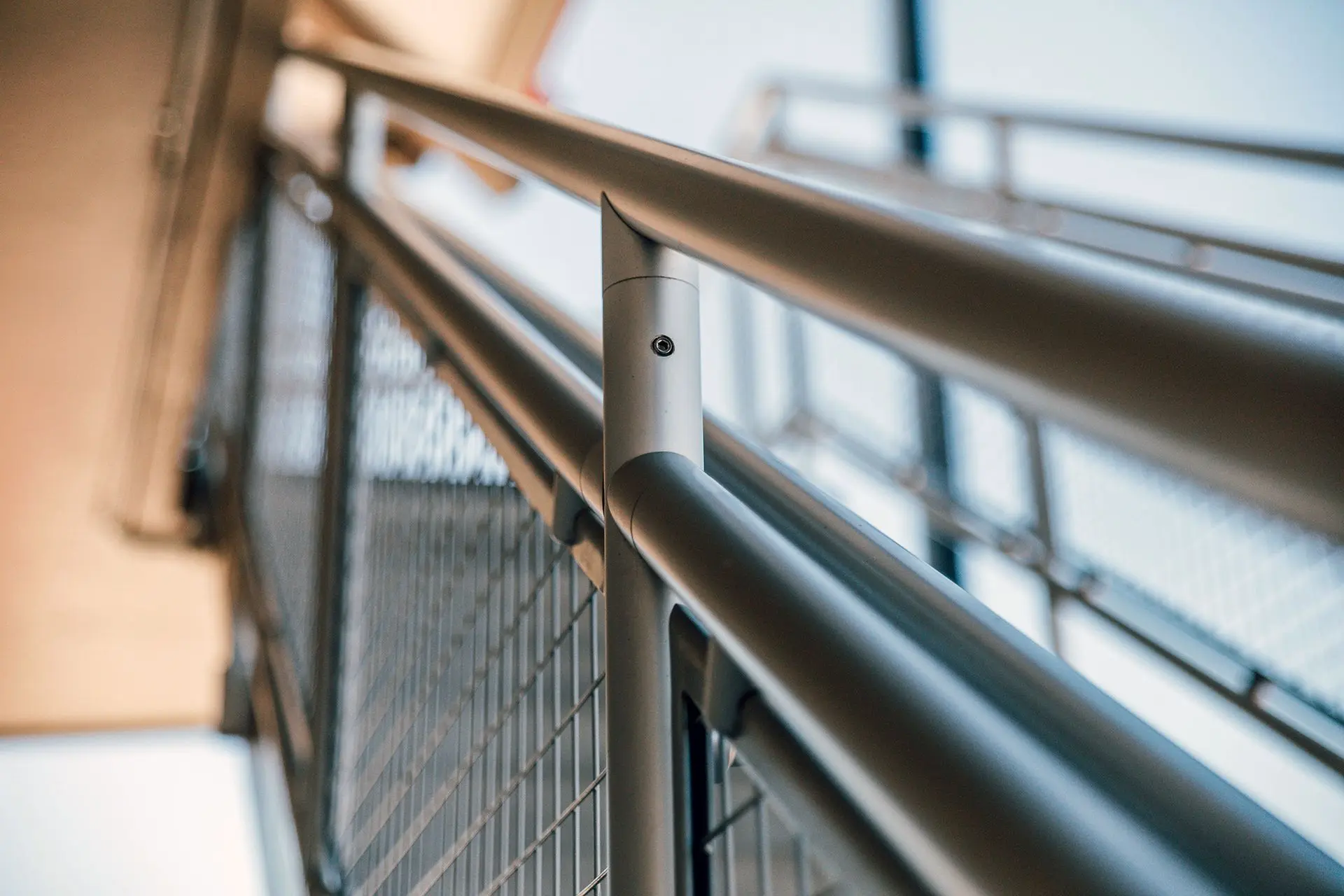
When Is a Handrail Required for Stairs (OSHA Rules)
Handrails are not just a recommendation — they are a legal requirement in many workplaces. The safety and health administration clearly defines a set of OSHA handrail requirements for stairs to protect workers from falls and ensure compliance with OSHA regulations on handrails.
Here are five examples, outlining when a handrail is required as per OSHA rules:
- Stairs with four or more risers: OSHA stair railing requirements apply to any stairway that features four or more stair treads.
- Platforms & elevated walkways: When the walking working surface has unprotected sides or edges, the OSHA platform handrail requirements demand handrails.
- Vertical Rise of 30 Inches or More: The OSHA height requirements mandate safety handrails even when the surface is inclined.
- Unsecured Open-sided Stairways: A step where one or, in the worst-case scenario, both sides are open and unprotected, OSHA handrail standards apply.
- Construction Access Points: Additionally, there are OSHA requirements for handrails on steps for non-permanent stairs or construction scaffolding.
What Is the Standard Railing for OSHA
The OSHA standard handrail refers to the essential measurement that every stair rail system or railing system must meet to protect workers.
To better grasp these handrail requirements, OSHA standards, here is a clear outline:
| Component | OSHA Requirement | Notes |
| Top Rail / Handrail Height | 42 inches for platforms / 30–38 inches for stairs | Measured from leading edge of stair tread or walking working surface; meets OSHA handrail height requirements |
| Midrail / Intermediate Member Height | Approx. 21 inches | Part of equivalent intermediate members, also called the OSHA handrail midrail height |
| Maximum Opening Between Members | 19 inches | Applies to members such as balusters; ensures compliance with OSHA handrail standards |
| Load Capacity (Top Rail) | 200 lbs downward or outward | Rail must be capable of withstanding force; it must satisfy OSHA stair handrail requirements |
| Load Capacity (Intermediate Members) | 150 lbs in any direction | Meets the OSHA handrail requirements platform |
| Handrail Shape / Diameter | Graspable, smooth surface | Complies with OSHA handrail diameter requirements and avoids hazardous projections |
Let’s next get into specifics and explore how OSHA regulates handrail posts!
What Does OSHA Require In Between Two Handrail Posts
When it comes to the space between two handrail posts in a stair rail system, the strict OSHA requirements are not just a technicality you should overlook. To ensure compliance with OSHA handrail requirements, the space between the handrail posts must include protective elements.
The correct installation of these equivalent intermediate members verifies that the walking surface is secure for anyone using the platform or stairs.
Here are the OSHA requirements for what goes between the handrail posts:
- Intermediate Members: First and most important, are members such as balusters, panels, screens, or other materials blocking the opening.
- Maximum Opening: As per the OSHA handrail guidelines, there must be no gap, especially when the intermediate members exceed 19 inches.
- Minimum Load Capacity: The OSHA requirements for handrails outline that all of the intermediate members must be fully capable of withstanding a minimum of ~150 lbps.
- Height Requirements: The OSHA handrail midrail height is typically around 21 inches from the walking working surface, roughly halfway between the top rail and the floor.
- Surface and Shape: Members must be smooth, free of hazardous projections, and comply with OSHA handrail rules for graspability and safety.
Hence, following all of these specifications verifies that your stair rail systems fully comply with OSHA requirements for stairs and handrails. So, adhering to these rules protects workers and upholds occupational safety and health on every elevated surface.
Let’s next learn more about the OSHA handrail requirements for platforms and the specific OSHA height requirements for handrails.
What Are the Dimensions of OSHA Railing
The proper OSHA railings are essential for safety on stairways, platforms, or any sort of ramps, and elevated surfaces that could represent danger. That’s why OSHA sets these precise OSHA handrail specifications to ensure that every stair rail system is secure and compliant with safety.
Hence, knowing the correct OSHA handrail height, spacing, and load requirements is critical for meeting OSHA handrail rules and protecting anyone using the ramp or walking working surface.
Here is a clear technical look at the OSHA strict dimension specifications:
| OSHA Requirement: | Important Notes: | |
| Handrail Clearance from Wall | 1.5 inches minimum | This guarantees that the handrail is graspable without any obstruction. |
| Handrail Projection | ≤ 4.5 inches past the top/bottom stair | This refers to the potential hazard on the walking working surface. |
| Stair Riser to Tread Ratio | Riser 4–7.75 inches, tread ≥ 9 inches | This maintains a secure stair rail system geometry and complies with the OSHA stair handrail requirements. |
| Platform Edge Offset | ≥ 2 inches from the leading edge | This mainly prevents trips and falls, while it meets the OSHA requirements for handrails on platforms. |
| Handrail Extension Beyond Top/Bottom | 12 inches recommended | Provides full support beyond the stair run in line with OSHA handrail guidelines. |
Adhering to these dimensions ensures that all railings meet OSHA railing height requirements and maintain the correct OSHA railing height for safe use. Therefore, properly installed railings help prevent accidents and protect anyone navigating your stairs, ramps, or elevated surfaces.
Note: You need to ensure proper clearance, projection, and riser-to-tread ratios to meet OSHA handrail requirements.
What Other Details Does OSHA Require for Railing
In addition to everything we’ve already gone through, OSHA also specifies a few additional details that go beyond height, spacing, and regulations.
For instance, whether it’s handrails, a railing system, or protective panels must feature a really smooth surface on the top to avoid dangerous edges. Also, the OSHA stair railing requirements outline the strength and capacity of the platform or the railing system to ensure reliable support.
Another quick example would be the OSHA hand railing height and the OSHA rail height rule that speaks about consistency across platforms and stairs. This maintains similarity between different ramps and platforms to guarantee safety.
Other critical considerations include proper OSHA handrail standards for platforms and steps, secure fastening to walking working surfaces, and adherence to 29 CFR regulations. The rails must remain capable of withstanding expected loads and include equivalent intermediate members where necessary.
Need OSHA Compliant Handrails?
If you want to get your hands on and install OSHA-compliant handrails, we strongly encourage you to visit BuyRailings.com and explore the wide range of handrail solutions.
Our products are crafted to meet all the OSHA handrail requirements, including everything from the correct OSHA handrail height to the rightful midrail spacing and the construction’s durability.
From stair handrails to platform and safety railings, everything is designed to comply with OSHA stair handrail requirements and OSHA railing standards. Using professional-grade materials and easy installation guides, you can ensure the workplace meets OSHA requirements for handrails on stairs and elevated surfaces.