 Shopping Cart (



Tubing
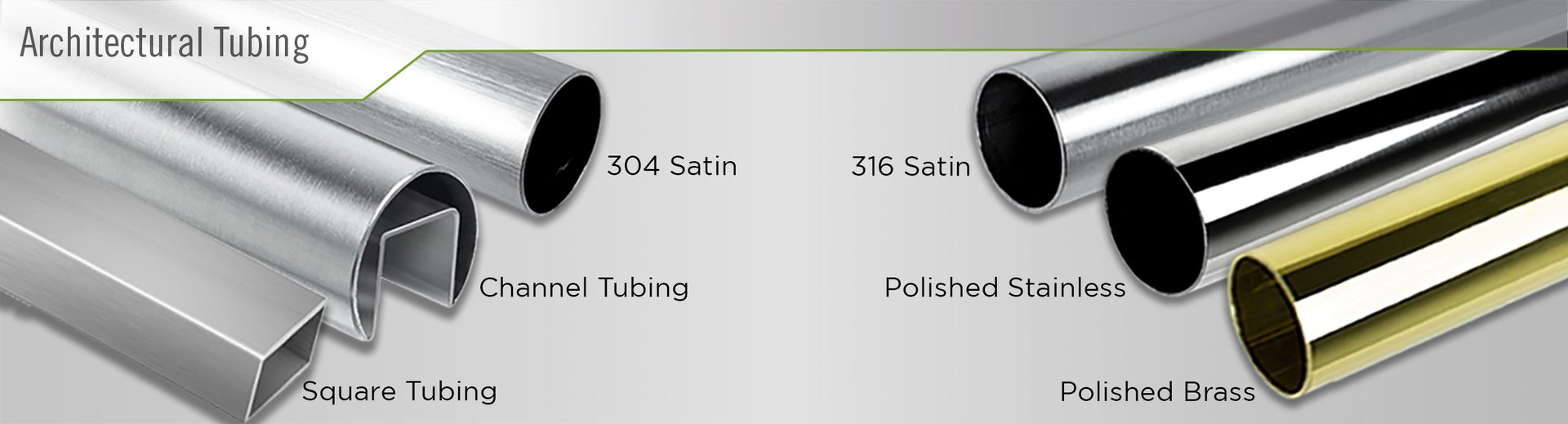
Steel Tubing for Handrails & Architectural Railing Systems
Selecting the proper structural profile is the most critical decision in any architectural fabrication project. Whether you are engineering code-compliant steel tube handrail systems, outfitting a high-traffic commercial facility, or sourcing high-end brass railing and tubing for a hospitality space, your choice of material directly impacts structural integrity and safety.
At BuyRailings, we supply precision-engineered steel tubing for handrails designed to meet rigorous architectural standards. Our collection features premium-grade fittings and decorative tube railing metals optimized for wall thickness, finish consistency, and seamless integration with our modular structural components.
Technical Specifications: What Size Tubing for Handrails?
A primary concern for fabricators and inspectors is determining: What size tubing is used for a handrail?
To comply with international and local building codes, handrails must meet strict dimensional clearances to ensure a secure, slip-free grip for users.
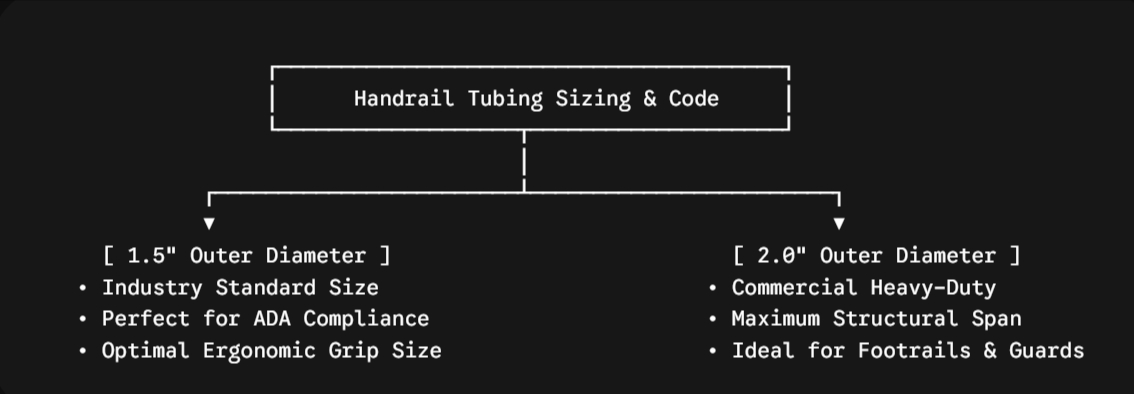
- The 1.5-Inch Standard: The standard industry size for residential and commercial steel handrail standards is 1.5 inches (1.50" OD) in outer diameter. This profile provides the optimal ergonomic grip width required by the Americans with Disabilities Act (ADA).
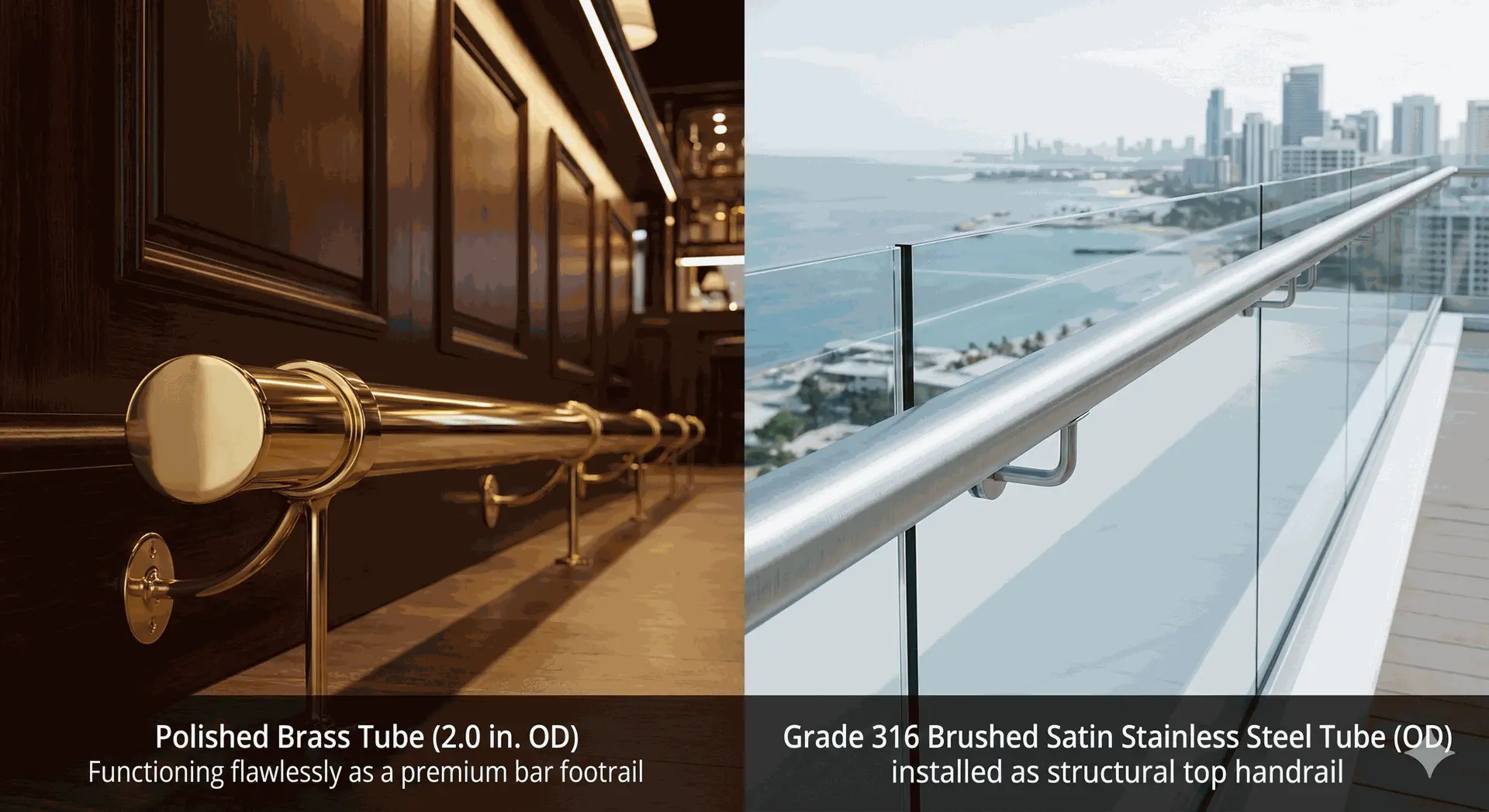
- The 2.0-Inch Standard: For heavy-duty commercial guardrails, bar footrails, or high-clearance architectural features, a 2.0-inch (2.00" OD) outer diameter tube is utilized to maximize structural spans and load resistance.
- Optimized Wall Thickness: All our architectural tubing features a precision 0.050-inch wall thickness (18-gauge). This ensures an exceptional strength-to-weight ratio, allowing the tube to resist heavy lateral impacts while remaining straightforward to cut, splice, and weld on-site.
Our brackets are precision-molded to perfectly cradle standard steel tubing for handrails profiles, ensuring a completely flush, wobble-free mounting system.
Material Metallurgy: Selecting the Right Alloy
When choosing a rail fitting system, the metal, environment, and usage frequency dictate your alloy choice.
1. Stainless Steel Tubing (Grades 304 and 316)
If you are specifying a permanent, industrial, or modern architectural handrail, structural stainless steel is the gold standard.
- Grade 304 Stainless Steel: Best suited for interior architectural accents, indoor staircases, and light commercial environments where moisture and chemical exposure are minimal.
- Grade 316 Stainless Steel: Engineered with added molybdenum, Grade 316 provides superior resistance to chloride corrosion. This is the mandatory alloy for outdoor steps, coastal installations, wastewater facilities, and marine environments. Available in both mirror-polished and satin brushed finishes.
2. Solid Brass Tubing
For high-end hospitality spaces, classic banks, and custom residential design, solid brass tubing offers an unmatched decorative warmth. Brass naturally patinas over time, or it can be polished regularly to maintain a bright, luxury mirror finish. It is ideal for interior handrails, footrails for bars, and decorative balustrade accents.
Looking for high-end architectural aesthetics instead of raw industrial pipe? Browse our premium-grade stainless steel tubing selection for pristine satin and polished finishes.
Frequently Asked Questions (FAQ)
What metal is used for handrails in commercial buildings?
Commercial structures primarily utilize stainless steel tubing or structural aluminum. Stainless steel is preferred for high-traffic environments because it resists scratches, requires near-zero maintenance, and easily withstands the rigorous weight loads mandated by safety inspectors.
What type of steel is used for railings and handrails?
Architectural handrails utilize low-carbon stainless steel alloys, specifically Grade 304 or Grade 316. Unlike standard carbon steel, these alloys contain high percentages of chromium and nickel, preventing rust and surface pitting without the need for continuous painting or powder coating.
What is the 4th rule for railings?
The "4 Rule" dictates that intermediate support brackets or structural posts must be spaced no more than 4 feet (48 inches) apart along the length of the tubing run. This prevents the metal from flexing, bowing, or fatiguing under concentrated weight loads.
Step-by-Step System Assembly
Assembling steel tube handrail systems without specialized welding equipment is highly efficient when utilizing mechanical slip-on or internal splice connectors:
1. Measure and Cut the Tubing: Precision Cutting.
Determine your total run length, factoring in the width of your end flanges or returns. Cut your stainless steel or brass tubing to size using a specialized pipe cutter or a high-tooth metal saw blade.
2. Insert Internal Splices and Connectors: Internal Alignment.
To extend a continuous run beyond a standard tube length, slide an internal splice or connector into the joint between the two tube sections. This ensures a flush, perfectly aligned seam.
3. Secure to Handrail Brackets: Bracket Anchor.
Position your assembled tubing onto your wall-mounted handrail brackets. Drill small pilot holes through the underside of the tube and secure it tightly to the bracket cradle using heavy-duty self-tapping screws.
Related Categories
Need guidance? Visit our Contact Us page or call the number shown at the top of the site for specialist support.