 Shopping Cart (




Few architectural elements command the timeless elegance, historic charm, and sheer structural dominance of a custom wrought iron staircase railing.
From decorative wrought iron front porch railings to striking wrought iron railings for indoor stairs, this material has been a premium choice for residential and commercial properties for centuries.
However, modern metallurgy has introduced high-performance alternatives like structural aluminum, stainless steel, and vinyl. If you are researching wrought iron railings for outdoor or interior systems, it is essential to understand the structural realities, long-term maintenance needs, and pricing dynamics before investing.
In this guide, we break down what true wrought iron is, evaluate its performance across interior and exterior applications, analyze costs, and help you find the right wrought iron railings design for your property layout.
What Is Wrought Iron? (Wrought Iron vs. Cast Iron)
To understand its value, you must first answer a common question: what is wrought iron, and how does it differ from other metal alloys?
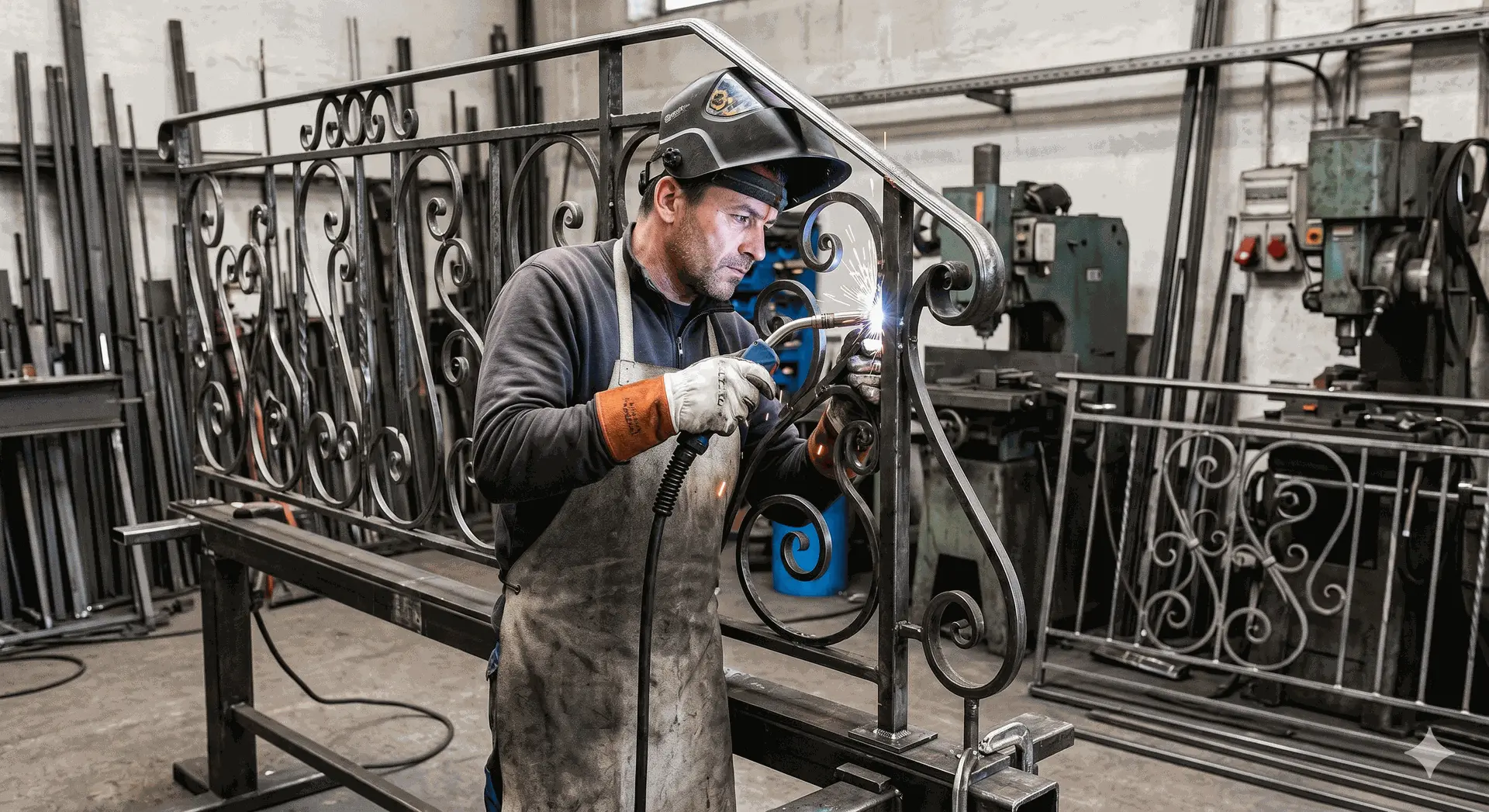
- Wrought Iron: Literally meaning "worked iron," this is a highly malleable iron alloy with a very low carbon content mixed with fibrous slag inclusions. It is heated and hammered into shape by hand or machine, giving it an incredibly high tensile strength and a distinct, textured grain structure.
- Cast Iron: This metal is melted down completely and poured into a static mold. While highly rigid and excellent for intricate ornamental castings, cast iron is brittle under high impact and prone to cracking under extreme physical stress.
- The Modern Substitute ("Rod Iron"): Real, historic wrought iron is no longer produced on a massive commercial scale. When people search for modern wrought iron products or a rod iron railing, they are typically purchasing highly durable carbon steel or structural solid iron that has been forged and styled to mimic traditional ornamental ironwork.
The Pros and Cons of Wrought Iron Railings
Evaluating the interior and exterior performance of wrought iron railings requires weighing their unmatched aesthetic longevity against their maintenance baseline.
The Pros: Why Choose Wrought Iron?
- Unrivaled Durability: A properly maintained system can easily last over a century. It resists heavy physical impacts far better than vinyl or thin-gauge aluminum.
- Endless Design Versatility: Because the metal is forged, you can achieve highly intricate, customizable wrought iron railing designs, from sweeping scrollwork to sleek, minimalistic modern bars, and even wrought iron railings with wood tops.
- Substantial Security & Weight: Ideal as structural wrought iron guard rails, perimeter safety barriers, or heavy-duty wrought iron step railings.
- High Property ROI: Premium ornamental ironwork instantly boosts curb appeal and adds tangible resale value to homes, porches, and commercial facilities.
The Cons: The Structural Drawbacks
- High Vulnerability to Corrosion: Does wrought iron rust? Yes. If the raw metal is exposed to oxygen and moisture, it will oxidize. Wrought-iron railings, outdoor steps, and coastal balconies require routine monitoring to protect their finishes.
- Demanding Maintenance: Unlike aluminum, you cannot install iron and forget it. It requires periodic sanding, priming, and fresh coats of specialized paint for wrought iron railings to seal out moisture.
- Higher Initial Cost: The raw material density and intensive forging labor drive the initial price significantly higher than that of mass-produced modular rail kits.
- Heavy, Complex Installation: Iron systems require robust structural anchoring into concrete or wood framing, often necessitating specialized wrought-iron railing parts, heavy-duty brackets, or specialized local contractors.
Exterior vs. Interior Applications
Where you place your railing directly dictates its longevity and maintenance schedules.
                  ┌────────────────────────────────────────┐
                  │      Wrought Iron Railing Placement    │
                  └───────────────────┬────────────────────┘
                                      │
             ┌────────────────────────┴────────────────────────┐
             ▼                                                 ▼
   [ Exterior Systems ]                               [ Interior Systems ]
  • Front Porches & Balconies                       • Atriums & Grand Staircases
  • High Rust Risk (Rain/Snow)                      • Zero Moisture Exposure
  • Requires Galvanized Coatings                    • Pair with Luxury Wood Tops
  • Perfect for Safety & Security                   • Lifetime Architectural Focus
1. Wrought Iron Outside Railings (Steps, Porches, Decks)
Whether you are installing wrought-iron porch railings or sweeping wrought-iron outdoor stair railings, environmental exposure is your biggest hurdle.
In high-moisture or winter climates, such as sourcing wrought iron railings in Chicago or dealing with changing seasonal humidity for wrought iron railings in CT, your outdoor steps require a resilient protective barrier.
Ensure your exterior metal is powder-coated, galvanized, or sealed with a rust-inhibitive primer.
- Design Tip: Maximize your exterior layout functionality by integrating wrought iron planters for railings directly into the structural balustrade for a timeless, elegant aesthetic.
2. Wrought Iron Railings for Stairs Interior
Inside the home, moisture concerns disappear. A wrought-iron staircase railing interior system allows you to explore ungalvanized finishes, highly intricate artistic details, and beautiful material combinations.
Pairing dark, matte-black forged-iron balusters with warm oak or mahogany wood top rails creates a striking, luxurious focal point for entryways and multi-story foyers.
Financial Analysis: Wrought Iron Railings Price & Costs
Investing in forged metal requires a clear understanding of the financial landscape.
| Railing Material Type | Average Cost Per Linear Foot | Maintenance Level | Estimated Lifespan |
| Wrought Iron / Forged Steel | $40 - $100+ | Moderate to High | 100+ Years (With Care) |
| Structural Aluminum | $30 - $60 | Zero Maintenance | 50+ Years |
| Vinyl / PVC Systems | $20 - $40 | Low | 15 - 20 Years |
Wrought Iron vs. Aluminum Railings Cost
While a wrought iron railing may require a higher upfront investment due to its weight and custom manufacturing labor, its long-term annual cost is exceptionally low.
Aluminum is lighter and cheaper to ship, but a solid iron system offers structural rigidity and impact resistance that hollow aluminum profiles simply cannot replicate.
(Note: If you ever demolish an older property, historic iron components retain a distinct wrought iron railings scrap value due to the purity and recyclability of the underlying base metal alloy.)
Frequently Asked Questions (FAQ)
How do I prevent my outdoor wrought-iron porch railings from rusting?
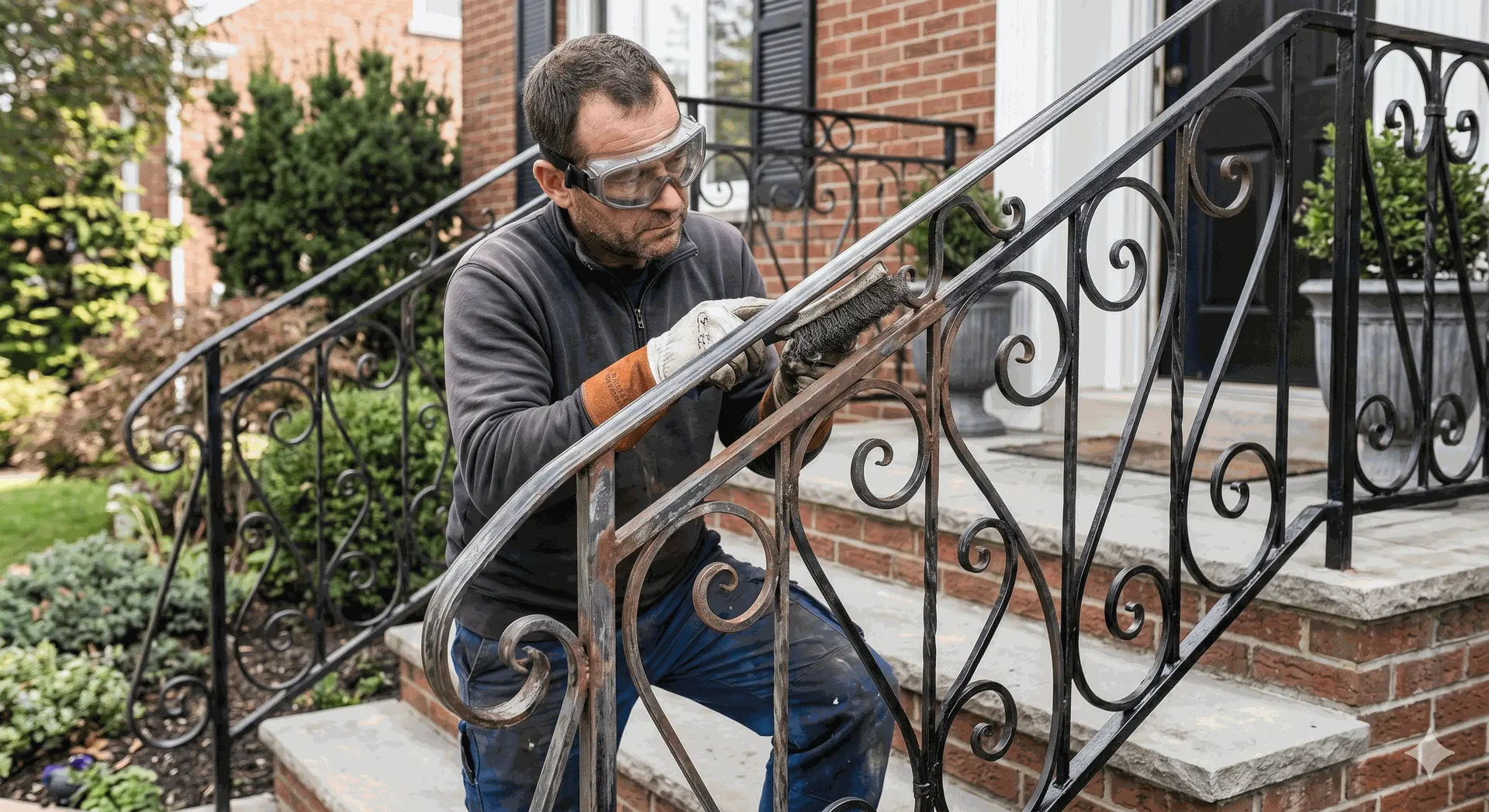
To prevent rust on wrought iron railings for outdoor steps, you must maintain an unbroken protective seal. Every 2 to 3 years, inspect the structure for chips or scratches.
Lightly sand away any surface oxidation, apply a specialized zinc-rich rust-preventative primer, and finish with a high-grade, UV-resistant exterior enamel paint.
Can I install wrought iron railings near me without a custom welder?
Yes. While historic systems required on-site blacksmithing, modern manufacturing allows you to purchase prefabricated panels, universal mounting brackets, and individual wrought-iron railing parts.
This allows contractors and skilled DIY builders to anchor and assemble beautiful, structural systems into concrete or wood decks using standard masonry anchors and structural fasteners.