 Shopping Cart (




When people plan and brainstorm ideas for transforming their outdoor space, whether it’s a deck or staircase, composite railings always stand out.
If we go beyond their security features, we find that the composite railing is one of the popular choices due to its clean look, strength, and low maintenance.
This quick guide explores composite railing in its entirety, covering what it is made of, how it holds up over time, and why it is a popular choice. We’ll also cover their cost, maintenance, and even touch on composite deck railing, so you can clearly see your options.
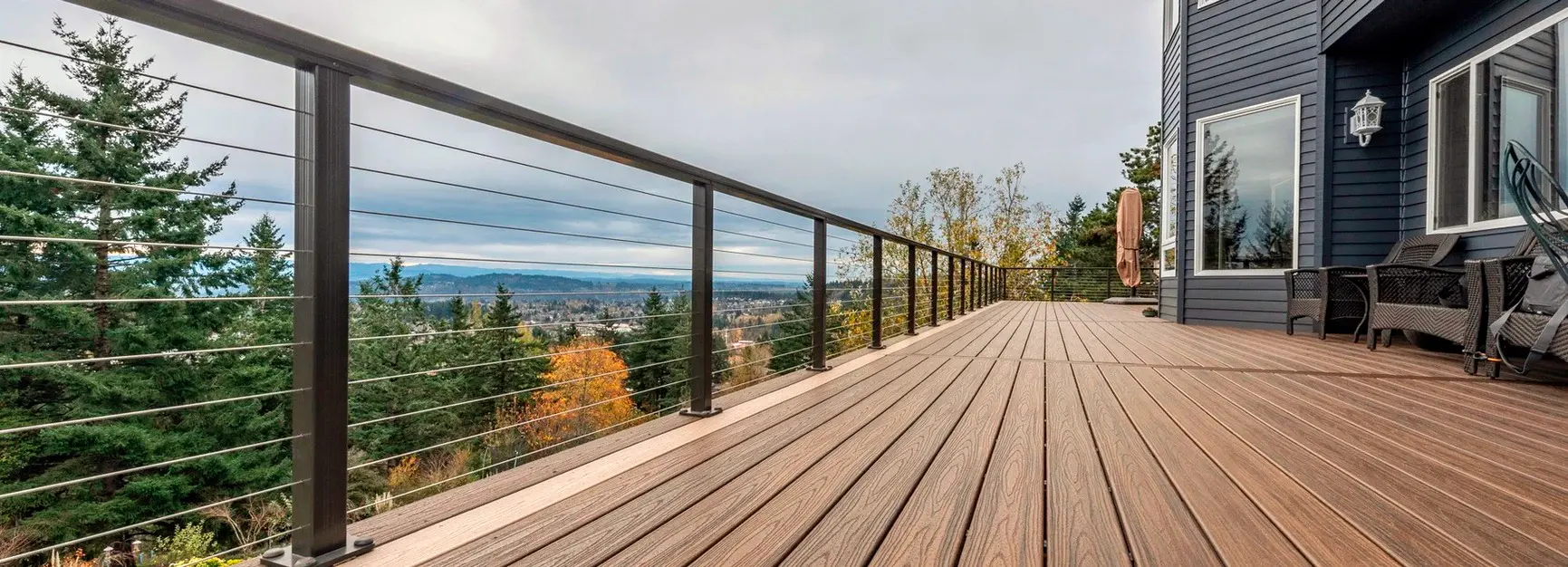
What are Composite Railings Made Of?
To explain what composite railings are made of as simply as possible, we can say that they are crafted from “composite materials”, optimized to resist weather and wear. Most of the composite railings offer a mix of recycled plastic with wood fibers or sawdust, which mimics a wood finish.
Others feature High-Density Polyethylene (HDPE) combined with a protective PVC layer or even a polymeric cap for ultimate resistance.
Here are a few variations of composite railings and what they are made of:
- Wood-Plastic Composites (WPC): The well-known “WPC” is a mix of ground wood fibers and high-density polyethylene (HDPE).
- Capped Composites: The core of the capped composites is made from recycled materials and then wrapped with a protective PVC.
- Hybrid Systems: There are also hybrid composite railings, pairing posts made from recycled materials and aluminum rail.
The bottom line here is that there are a lot of mixtures and possible variations. The main perk, however, is the wooden appearance, which doesn’t have the main wood disadvantage – wear.
Is Composite Deck Railing Worth It?
In many cases, yes, composite deck railing, for example, is completely worth your investment.
Well, it shouldn’t be surprising that the upfront composite deck railing cost is going to be higher when compared to wood, but many savings come in later.
They include:
- Reduced maintenance
- Long railing lifespan
- Few to no replacements
In addition, you won’t need to sand and paint these railings every year, and a quick wash using a garden hose is everything you need to maintain them.
So, if you’re a homeowner who values strength and durability, and appreciates modern rail design, composite railing for a deck is an excellent choice.
Composite Railing Maintenance and Upkeep
As mentioned, the biggest advantage of a composite railing system is the low upkeep and the minimal effort needed for it to always look fresh.
If we take wood, for example, which requires seasonal maintenance such as sanding/painting, the composite material is designed to withstand fading, moisture, and splintering. All you need to do is occasionally spray it with a garden hose to remove all the dust or pollen accumulation.
In rare cases, to clean the composite railing efficiently, especially the tougher spots, you may need to add some soap to the water and use a soft brush. However, one thing is certain: a clean composite deck railing doesn’t require too much effort.
If you notice aggressive stains or resistant spots, warm water mixed with a bit of acrylic latex is super effective and safe to use. The result is a crystal clear railing that maintains its appearance over the years, with far less work than traditional deck railings.
That’s how to clean composite railing – quick and easy!
Composite Railing Benefits
If you go with composite railings for your outdoor space, you’ll benefit from several advantages. These advantages range from longevity to strength and design appeal, so let’s go over some of the most significant pros for homeowners:
Long-Lasting
The most significant advantage is, of course, the strength and ultimate resilience of composite materials, meaning that the railing is robust. To outline a few standout longevity factors, we can mention the rot and splintering resistance, which hold up to sun, rain, snow, and temperatures.
In short, your investment lasts!
Low Upkeep
By upkeep and maintenance, we don’t always mean cleaning. Take wooden railings, for example. Now and then, wood starts to rot or loses its finish, which, if not a complete replacement, requires sanding and painting. This does not always require planning and effort, but it may be costly.
In turn, with the composite handrail systems, maintenance is straightforward, simple, and effective, without any annual interventions.
Design Versatility
If you have already explored the market, you’ve probably noticed the endless composite railing ideas, finishes, and designs available. There are so many options, some of which include deck board colors, decorative post caps, aluminum rails, and many different and unique rail designs.
You may also find composite decking with wood railing, entirely no post composite stair railing, or many other composite decking railing options.
Therefore, whether you’re looking for something aesthetic, traditional like wood, or modern, the composite railings will surely cover it.
Safety & Comfort
As previously mentioned, one of the greatest advantages of a composite handrail for stairs is its durability, which is entangled with immense strength. Something that lasts must be strong, and composite stair railing guarantees stability, regardless of whether you intend to set the system.
In short, the composite decking and railings are a great way to ensure your safety and comfort.
Vinyl Railing vs Composite Railing - Know the Difference
If you’re planning the renovation of your outdoor area, you’ve probably also come across the vinyl railing and the never-ending weight against composite railings.
While both are low-maintenance alternatives to wood, they differ in a few important ways:
- Vinyl railing: The vinyl railings are made entirely from PVC; they are light and less expensive per linear foot.
- Composite: Fully crafted from a blend of wood fibers and plastics, making them more stable, a lot more natural-looking, but more expensive.
Note: While both materials are easier to maintain than wood, the choice often comes down to priorities, installation requirements, and appeal.
Can You Paint Composite Railing?
Many homeowners wonder if they can paint composite deck surfaces to match a new deck design. While can you paint composite deck railing is possible, it requires preparation and the right type of paint for long-lasting results.
Note: If you’re wondering can you put composite railing on wood deck, yes, but make sure the posts and fasteners are properly secured to the wooden structure to maintain the stability.
What Do You Need to Install Composite Railings
While setting up and installing composite railing systems seems straightforward, you still need to acquire the necessary tools and materials. The preparation for installing a composite deck railing guarantees that the process goes smoothly.
Here’s everything you’ll need for anything from composite railing for decks to other railing for composite decking itself:
| Purpose: | |
| Railing posts | Support structure for rails and infill |
| Composite deck handrail | Main horizontal rail for grip and safety |
| Balusters or infill panels | Fill the space between posts |
| Fasteners & brackets | Secure posts, rails, and panels |
| Measuring tape & level | Ensure straight and aligned installation |
| Saw | For how to cut composite deck railing to size |
| Drill & screws | For composite railing installation |
| Safety gear | Gloves, goggles, and a dust mask for protection |
| Composite deck railing kits | Optional, includes most components for easier assembly |
Note: You can also find entire composite handrail kits that include most of what you need to set up the railing on your composite deck.
Quick Tips for Installing Composite Deck Railing
If you’re wondering about ways to install composite deck railing correctly, you should begin with planning the layout and verifying that the composite railings for porches match the local building code. Whenever you put this aside, you’re ready to learn how to install composite deck railing:
Step 1: Plan Your Layout
Before starting, review your deck design and measure your space carefully. Understanding how to build a composite deck railing begins with knowing where posts, rails, and infill panels will go.
Step 2: Prepare the Deck
Then, ensure your deck is ready for railing by checking joists and stability for deck installation. Following proper guidelines for how to build composite deck railing ensures posts are secure and aligned.
Step 3: Install Posts and Rails
Set your composite railings for porch posts first, then attach the horizontal rails. Accurately measuring and leveling is key when learning how to build composite deck railing.
Step 4: Add Infill and Finish
Insert balusters, panels, or other infill, then secure with fasteners. After understanding how to build composite deck railing correctly, feel free to add a polished finish that complements your deck design and learn how to clean composite deck railing.
Quick Tip: We strongly encourage you to review as many composite deck railing ideas and understand exactly how much composite railing costs in your specific occasion, area, and specific requirements.