 Shopping Cart (



When it comes to wall handrails and the installation process, most enthusiasts pay attention to the style more than they think about the security, which is the wall-mounted handrail brackets.
Those are small pieces, but critical stair railing hardware that does a lot more than simply holding up a stair handrail. They’re responsible for the longevity, stability, and safety of the mounted handrail.
A loose or improperly installed handrail wall bracket can cause numerous issues in the long run, so selecting the correct wall rail brackets is essential.
That is why this quick guide will walk you through your handrail mounting bracket options for stair rails, help you choose materials and types, and guide you through the installation.
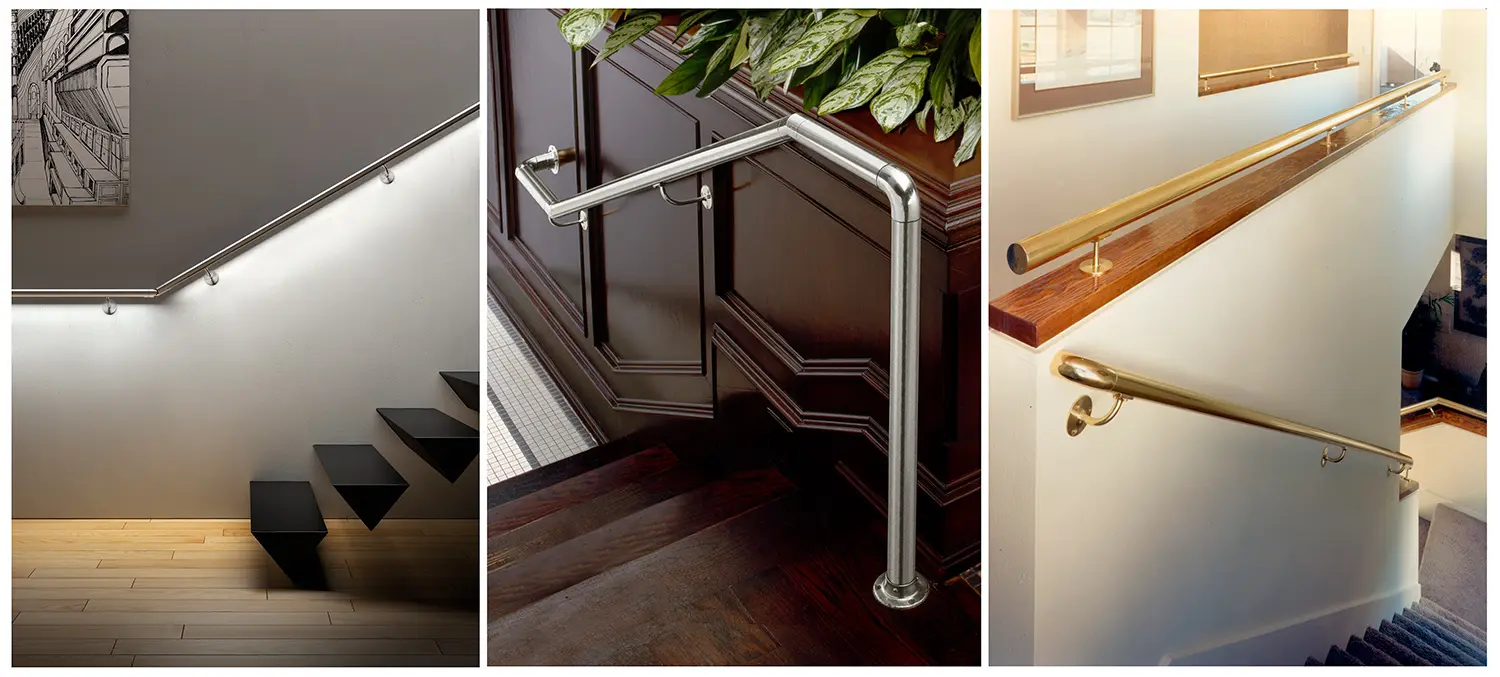
Why the Right Wall Brackets Matter
So, choosing the right handrail mounting bracket is critical for the installation process, since this little piece will keep the structure stable by distributing the weight evenly. If you decide to go with cheap or low-quality wall support brackets, the hardrail attachment to the wall can loosen over time and lead to safety hazards or risks for every climber.
In short, a solid and correct type of brackets for wall mounting is required; otherwise, the entire structure can collapse in a matter of months/weeks.
Wall Handrail Brackets Types (and When to Use Each)
The thing here is that different environments and railings require different handrail wall brackets. So, to help you identify the best fit for you, we’re about to explore the different brackets for wall mounting, depending on the weight of your hand railing.
| Bracket Type | Best For | Typical Load Capacity |
| Standard Wall Rail Bracket | It’s just perfect for any indoor stair handrail and corridors. | Up to 50 kg per bracket. |
| Adjustable Handrail Wall Bracket | It aligns well on angled or uneven walls and surfaces. | 40–60 kg, depending on the angle range. |
| Heavy-Duty Wall-Mounted Stail Railings | Good for any commercial railings, outdoor, or long rail spans. | 80–120 kg, reinforced stainless steel. |
| Decorative Wall Rail Bracket | Perfect for any living spaces and hallways. | 40–50 kg, often powder-coated. |
| Flush Mount Wall Bracket Handrail | Ideal for homeowners who like minimalist interiors. | 35–45 kg, compact mounted brackets. |
| Offset Rail Wall Bracket | Good for tight spaces or clearance requirements. | 50–70 kg, 60–80 mm offset. |
| Banister Wall Brackets | Matches ideally with most traditional stairways. | 50–60 kg, standard stair hardware fit. |
Brackets for Wall-Mounting Handrails - Material and Finish Choices
The proper selection of the material for your wall mount handrail brackets could make all the difference in the world, so it’s critical to pay attention here.
Many finishes can immediately affect how well the rail bracket will resist everyday use, such as wear (scratches and spots) and even rust when outdoors.
Here are a few materials and finish choices to consider:
- Stainless Steel: This is an excellent choice if you’re looking for longevity, since the stainless steel is corrosion-resistant and pairs well with stair rails or shelf brackets.
- Coated Steel: A power-coated steel, for example, is smooth and decorative, contrasting the stainless steel, but also protecting the handrail wall brackets from scratches/spots.
- Brass or Bronze: If you want simplicity and traditionalism in your home, brass or bronze would be a perfect choice for interior wall rail fittings, developing rich patina over time.
- Aluminum: If you’re aiming for something lightweight, easy to install, and suitable for a low-traffic area, aluminum is a great choice for hallways and balconies.
Tip: You can also draw inspiration from curtain rail wall brackets or curtain rod brackets, as their designs and finishes sometimes work well for lightweight indoor handrails.
How to Choose the Right Wall Rail Bracket for Your Project
The selection of the correct wall rail bracket is strictly based on several factors that include the rail’s weight, design, and, of course, your wall type.
- Drywall: If you have drywall, you can go with lighter wall hanging brackets or an aluminum wall mount handrail bracket
- Masonry: If your wall is naked to the brick, you may want to go with wall mount brace or rail wall bracket options for stability.
The bottom line here is that you must use handrail wall brackets based on the specific occasion, and most importantly, consider safety above all. The right bracket will ensure a correct fit and a solid attachment with a safe hand railing, which will also make the staircase railing easy to install.
Tools and Materials Needed to Install Wall-Mount Handrails Safely
The first step, before you even start the process, is, of course, the preparation of the required tools and materials for a secure wall fix handrail installation.
The proper railing wall mount, specifically, the mounting bracket wall fittings, include several components that you’ll need specific tools to deal with.
We’ve outlined everything you’ll need in the table below:
| Tools & Materials: | Purpose: |
|
Drill (Masonry and Wood Bits) |
You’ll need a drill to create holes for mounting bracket wall, and anchors. |
| Level | A level will help you ensure the wall bracket rail is perfectly horizontal. |
|
Screwdriver or Impact Driver |
A screwdriver will help you fasten the wall fix handrail securely. |
| Anchors and Screws | Anchors and screws are necessary for the support of the railing wall mount on different surfaces. |
| Measuring Tape | A measuring tape will guarantee an accurate spacing for a wide range of brackets. |
| Pencil and Marker | The pencil and marker are needed to mark drill points for the wall bracket rail. |
Mounting Methods: Anchors, Screws, Studs
When you get to the actual installation, you will have to choose a method for your handrails' wall-mounted fittings. The methods include:
- Anchors: Secure rails on drywall or masonry.
- Screws: It is perfect for studs and solid wood.
- Studs: Provide the strongest wall attachment.
Best Anchors for Masonry Walls
So, the best handrail attachment to the wall for masonry is rail wall brackets that work with a sleeve or an “expansion anchor”. You definitely need to avoid weaker options with masonry, as even rod brackets may fail under heavy load.
Note: For lighter installations, a cabinet hanging wall mounting rail bracket can also be adapted to support small handrails or rails in low-traffic areas, providing extra flexibility.