 Shopping Cart (




Adding a secure stair handrail immediately boosts the safety, accessibility, and architectural style of your home or commercial space. For many homeowners, the question is: Can you install a handrail yourself?
Absolutely. Putting up a handrail is a highly manageable weekend project, provided you understand local building codes and the precise math required for structural stability.
Whether you are putting up a banister rail for an interior staircase or upgrading an outdoor ramp, securing your hardware correctly is critical to preventing accidents.
In this guide, we will break down exactly how to attach a handrail to a wall, determine the correct bracket spacing, and avoid the most common installation mistakes.
Handrail Bracket Spacing: The Math & Building Codes
Before drilling any holes, you must calculate exactly how much hardware you need. Handrail safety relies entirely on weight distribution.
What is the "4 Rule" for Railings?
When professionals discuss the handrail bracket spacing code, they are usually referring to the "4 Rule." This rule requires installing one support bracket every 4 feet (48 inches) along the length of the handrail.
This spacing ensures the rail will not bow, sag, or rip out of the drywall when someone places their full body weight onto it. Heavy-use commercial stairs may require tighter spacing (every 3 feet) for enhanced rigidity.
How Many Brackets for a 12-Foot Handrail?
Following the 4-foot rule, a standard 12-foot stair handrail requires 4 brackets.
- Bracket 1: 6 to 12 inches from the bottom end.
- Bracket 2: Roughly 4 feet up the rail.
- Bracket 3: Roughly 8 feet up the rail.
- Bracket 4: 6 to 12 inches from the top end.
Note: Always measure the exact length of your handrail and mark your wall studs first. You may need to shift the bracket placement slightly left or right to ensure you hit a solid wood stud.
Tools & Materials Required
Gathering the right materials ensures your wall-mounted stair rail meets building codes and remains secure for decades.
- Materials: Your chosen aluminum or stainless steel handrail, structural handrail brackets, heavy-duty wood screws, and finishing caps.
- Tools: A reliable stud finder, a tape measure, a chalk line or laser level, a power drill, and a screwdriver.
Step-by-Step: How to Install Stair Railing to the Wall
If you want to know how to install handrail brackets flawlessly the first time, follow this strict sequential process.
Step 1: Measure and Mark the Height
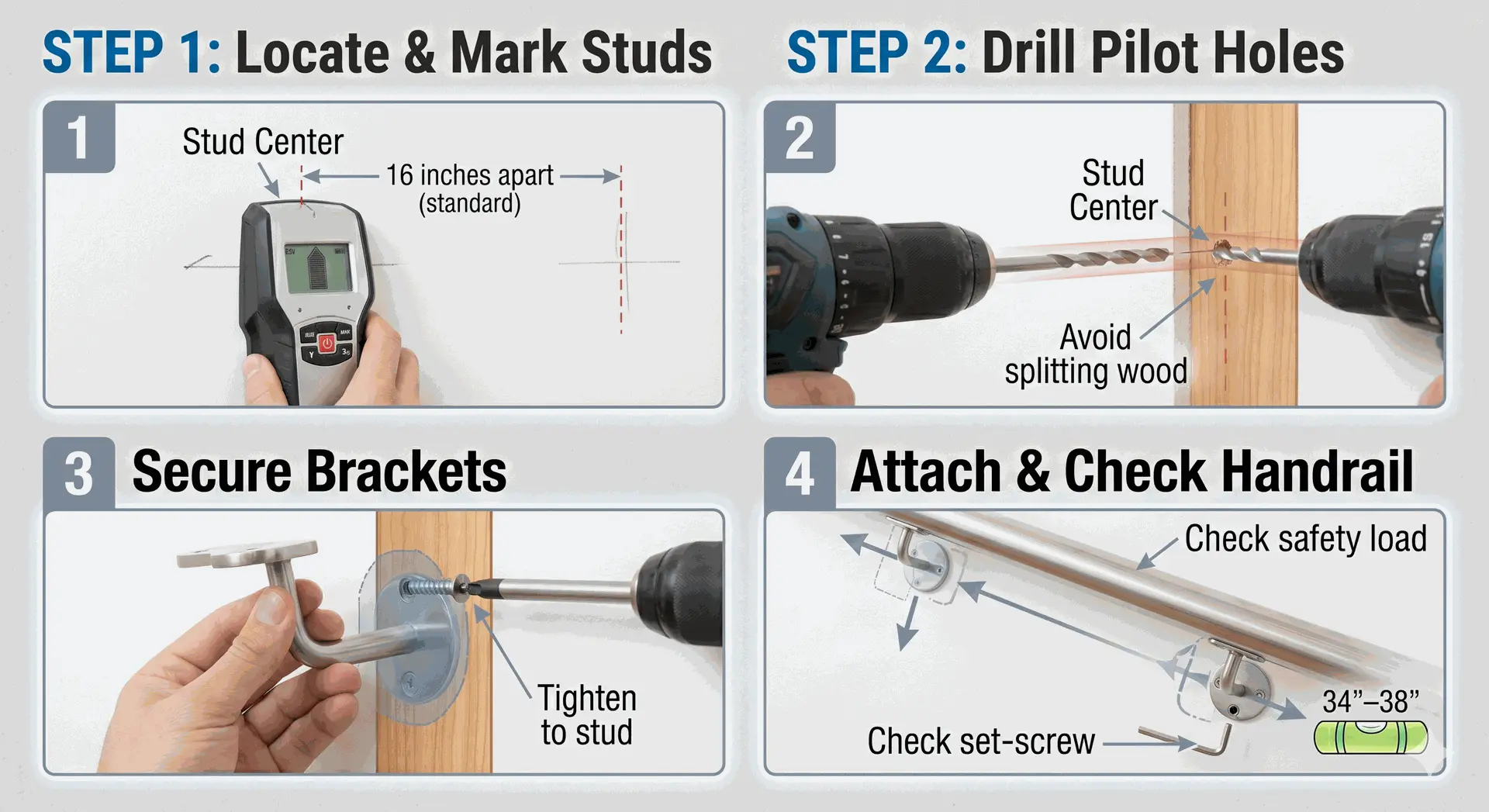
The most common handrail installation mistake is setting the height incorrectly. Local building codes universally require putting up a handrail on stairs at a height between 34 and 38 inches above the nosing (the front edge) of the stair treads.
Mark this height at the top and bottom of your staircase and snap a chalk line between the two marks to create your mounting angle.
Step 2: Locate the Wall Studs
Never mount a handrail directly into hollow drywall using standard screws. Use a high-quality stud finder to locate the vertical wooden framing studs behind your drywall. Mark the center of each stud that intersects with your chalk line.
Step 3: Drill Pilot Holes and Mount Brackets
Align your first bracket with your stud marks. Drill pilot holes slightly smaller than your mounting screws to prevent the wood stud from splitting.
Secure the bracket tightly to the wall. Repeat this process for your remaining brackets, ensuring that the spacing between handrail brackets adheres to the 4-foot rule.
Step 4: Attach the Handrail
Rest your metal or wood railing on top of the installed wall brackets. Once it is perfectly aligned, secure the handrail to the brackets using the provided set-screws or underside mounting hardware.
Step 5: Test for Handrail Safety
Once putting up a railing is complete, apply firm downward and outward pressure along the length of the bar. It should feel completely rigid with zero wobble or deflection.
Troubleshooting Advanced Scenarios
How to Attach a Handrail to a Wall Without Studs
Sometimes, your desired bracket spacing does not align with your home's wall studs. If you must mount a bracket in a hollow space in drywall, standard plastic drywall anchors will fail under human weight.
- The Solution: You must use heavy-duty structural toggle bolts (like Snaptoggles) rated for at least 200 lbs of shear force.
- The Best Practice Alternative: If no studs are available, contractors often install a solid-wood "backer board" horizontally along the wall, anchored to the distant studs. You can then mount your handrail brackets anywhere along that solid piece of wood for ultimate banister security.