 Shopping Cart (



Staircases are one of the most significant architectural hazards in a home once a toddler begins crawling and exploring. While modern, airy staircase designs, like floating steps, open risers, and horizontal cable railings, look beautiful, they are inherently unsafe for curious children and pets.
Standard home-building codes are designed for adults, not for tiny limbs. Wide baluster gaps, climbable horizontal bars, and unbacked open steps can quickly turn dangerous.
This comprehensive guide breaks down exactly how to child-proof stairs, modify specialized architectural designs, and choose the right safety barriers without ruining your home's aesthetic or drilling permanent damage into your woodwork.
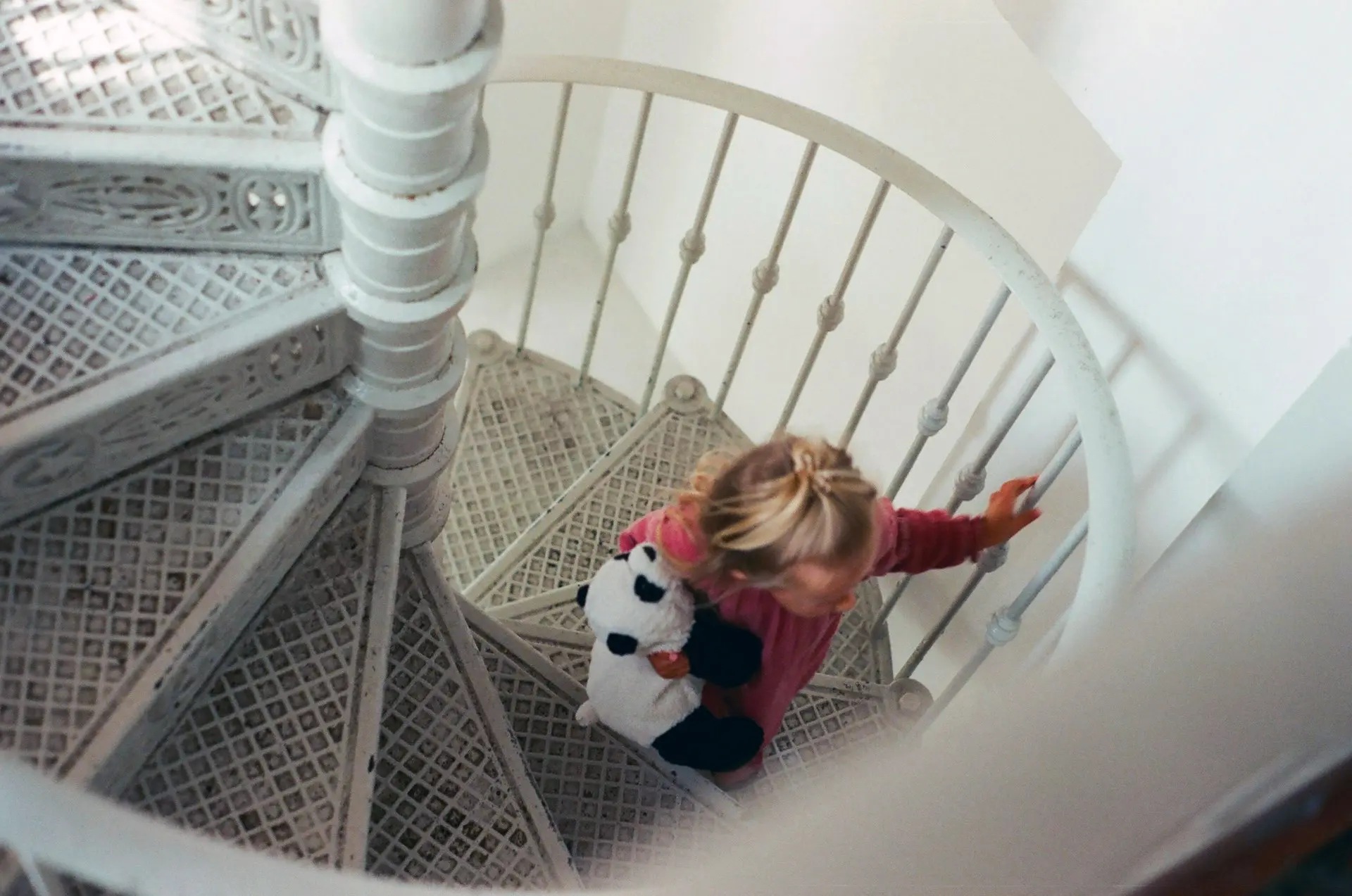
Which Stair Designs Are Most Dangerous for Children?
If you are evaluating your home's layout or planning a remodel, it is critical to know which stair design to avoid for children and which configurations require immediate intervention:
- Open Risers / Floating Stairs: Staircases without a vertical backing board between the steps pose a significant risk. A toddler can easily slip backward through the open gaps between the treads.
- Horizontal Cable Railings: These function exactly like a ladder. Toddlers naturally use the horizontal cables to climb up and over the banister line.
- Wide Baluster Spacing: Older railings often have gaps wider than 4 inches, which is wide enough for a child’s torso or head to slip through and become trapped.
How to Baby Proof Stair Railings with Gaps & Cable Designs
If your current banister configuration features wide openings or climbable rails, you do not need to replace the entire structure. Instead, deploy continuous structural barriers to establish a complete railing blocker.
Option #1: Child-Proof Stairs Plexiglass / Acrylic Panels
For horizontal cables or modern designs, installing clear acrylic or childproof plexiglass sheets is the gold standard. It creates a solid, unclimbable banister safety wall that completely eliminates foothold hazards while keeping your staircase visually open and bright.
Option #2: Child Proof Netting for Stairs & Heavy-Duty Mesh
A high-tensile, durable fabric mesh or banister rail guard can be wrapped tightly along the inner face of the balusters. Secured tightly with heavy-duty zip ties, this mesh acts as a flexible safety wall that prevents children from slipping their arms, legs, or heads through wide gaps.
Technical Guide: Baby Proofing Stairs with Open Risers & Floating Steps
Many parents struggle with how to baby-proof floating stairs or structures with deep gaps between the steps. Traditional safety nets rarely fit these configurations cleanly.
Structural Hacks for Open Treads:
- Install Temporary Riser Blocks: Cut pieces of clear acrylic or finished wood to size, then fasten them to the back of each open tread with heavy-duty, damage-free mounting brackets. This closes the gap to less than 4 inches, effectively eliminating the slip-through hazard.
- Full-Length Banister Covers: Enclose the entire exposed flank of a floating staircase with rigid, clear plastic shielding panels to prevent a child from approaching the open outer edge of the floating steps.
- Non-Slip Safety Tread Tapes: Open stairs lack visual borders, which impairs a toddler's depth perception. Apply clear, rubberized, non-slip safety strips along the edge of every step to prevent slipping or tumbling.
Choosing the Best Child-Proof Gates for Stairs
Blocking physical access to the staircase is your primary line of defense. However, using the wrong gate style in the wrong location can introduce new safety hazards.
Hardware-Mounted Gates (Mandatory for Top of Stairs)
When installing a child-proof gate at the top of the stairs, you must use a permanent, hardware-mounted gate that screws firmly into the wall or a structural newel post.
- Why: Pressure-mounted gates can slip and fail if a child leans or pushes their full body weight against them, causing a catastrophic fall down the entire flight. Always choose a gate that swings open inward toward the landing, never out over the steps.
No-Drill & Pressure-Mounted Gates (Best for Bottom of Stairs)
For the base of your staircase, or when installing baby gates on stairs without drilling, pressure-mounted models paired with heavy-duty rubber wall cups offer an exceptional temporary solution.
- Stairs Without Railing Wall Anchors: If your staircase has a drywall surface on one side and a metal or glass structure on the other, utilize specialized no-drill banister adapter kits. These clamps wrap around the structural post to provide a rock-solid mounting surface without penetrating the architectural material.
Step-by-Step Childproofing System Integration
Follow this logical setup sequence to ensure your entire staircase is completely secure from top to bottom.
- Secure the Top Access Point: Hardware Mount Only.
Install a structural, hardware-mounted safety gate at the top landing. Ensure the safety latch faces away from the stairs, and the gate cannot swing out over the steps. - Enclose the Banister & Gaps: Install Railing Guards. Measure the length of your railing. Secure clear acrylic sheets or heavy-duty child-proof netting along the inside of the banister to completely block climbable footholds and wide gaps.
- Block the Open Risers: Close Tread Gaps. If managing floating stairs or open risers, install temporary acrylic backing inserts to restrict the vertical gap between steps to under 4 inches.
- Secure the Bottom Access Point: No-Drill Adapters Allowed. Deploy a pressure-mounted or retractable safety gate at the base of the staircase. When matching with delicate railings, use a no-drill clamp adapter to secure the gate frame without damaging your finishes.
Frequently Asked Questions (FAQ)
How do you baby-proof stairs without a traditional railing?
If one side of your staircase is completely open to the room without a wall or a banister, you cannot safely use a standard pressure gate. Instead, you must install a modular, multi-panel hearth or perimeter safety gate system.
These systems are anchored firmly to the walls, far from the steps, creating an isolated safety perimeter that completely surrounds the staircase launch pad.
Can you use retractable baby gates at the top of a staircase?
Only if the specific manufacturer explicitly states that the model is certified for top-of-stair structural use and includes hardware wall mounts. Most fabric retractable gates can flex slightly when pushed at the base, which could allow a small, determined child to crawl under the fabric line.